🏠Take Control of Your Home Economy — Bringing It All Together🔁
Over the past six blogs, we’ve broken credit management down into clear, practical parts.
Over the past six blogs, we’ve broken credit management down into clear, practical parts.
Not hacks
Not quick fixes
Not score chasing.
Instead, we focused on something far more powerful:Building a system.
Because credit control doesn’t come from intensity. It comes from structure.
Let’s bring everything together.
🧠The Home Economy Mindset
Everything starts here.
Credit problems rarely begin with a single mistake. They begin when the home economy — the system connecting income, bills, credit usage, and risk — lacks visibility.
When there’s no clear structure:
Balances drift upward
Due dates cluster
Utilization spikes
Monitoring becomes reactive
The first shift isn’t financial. It’s mental.
You stop thinking: “Why did my score drop?”
And start thinking: “What changed in my system?”
That mindset shift changes everything.
🔔Monitoring Without the Stress
Monitoring isn’t about watching your score daily.
It’s about shortening the gap between:
A change happening
You becoming aware of it
High-value alerts protect you from:
Fraud
Reporting errors
Utilization spikes
Low-value alerts create noise. The goal is not obsession. It’s awareness.
Monitoring becomes the background safety net — not the main event.
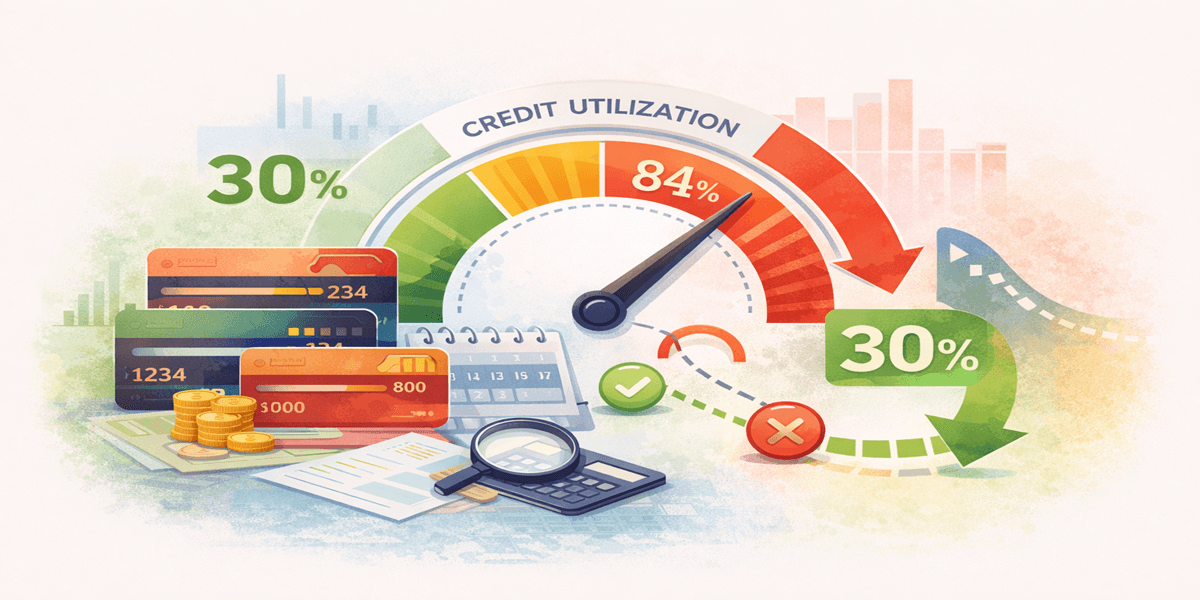
📉Mastering Credit Utilization
If there’s one lever that moves quickly, it’s utilization.
We covered how:
Utilization is reported on statement dates
Per-card balances matter
Thresholds (30%, 50%, 75%) create shifts
Timing can influence reported balances
This is where many households regain control fastest.
Not by earning more
Not by opening accounts
But by managing what’s already in motion.
Utilization becomes a signal — not a mystery.
📆Cash Flow & Payment Timing
Late payments and high utilization often trace back to timing misalignment.
We explored:
Statement dates vs due dates
Aligning bills with income
Early payments before reporting
Smart auto pay setup
Most credit stress isn’t affordability stress. It’s timing stress.
When payment timing aligns with income, credit stabilizes naturally.
🔁Automation That Supports You
Automation isn’t about “set and forget.”
It’s about protecting your system from:
Busy weeks
Human error
Small oversights
The layered approach works best:
🛠️ Minimum autopay for safety
🔔 Balance alerts for awareness
📆 Statement tracking for optimisation
🧮 Calculators for clarity
Automation doesn’t replace discipline. It protects it.
🧩Using Credit Tools Without Hurting Yourself
Credit offers and loans aren’t the enemy. Misalignment is.
We broke down:
🔍 Soft vs hard checks
The reality of “pre-approval”
When consolidation helps — and when it doesn’t
How rate shopping works
Credit tools amplify whatever system they enter. If your home economy is stable, they support flexibility. If it’s unstable, they magnify risk.
The lesson isn’t to avoid credit. It is to use it deliberately. And carefully.
📘The Monthly Credit Control Routine
Everything above only works if it’s repeatable.
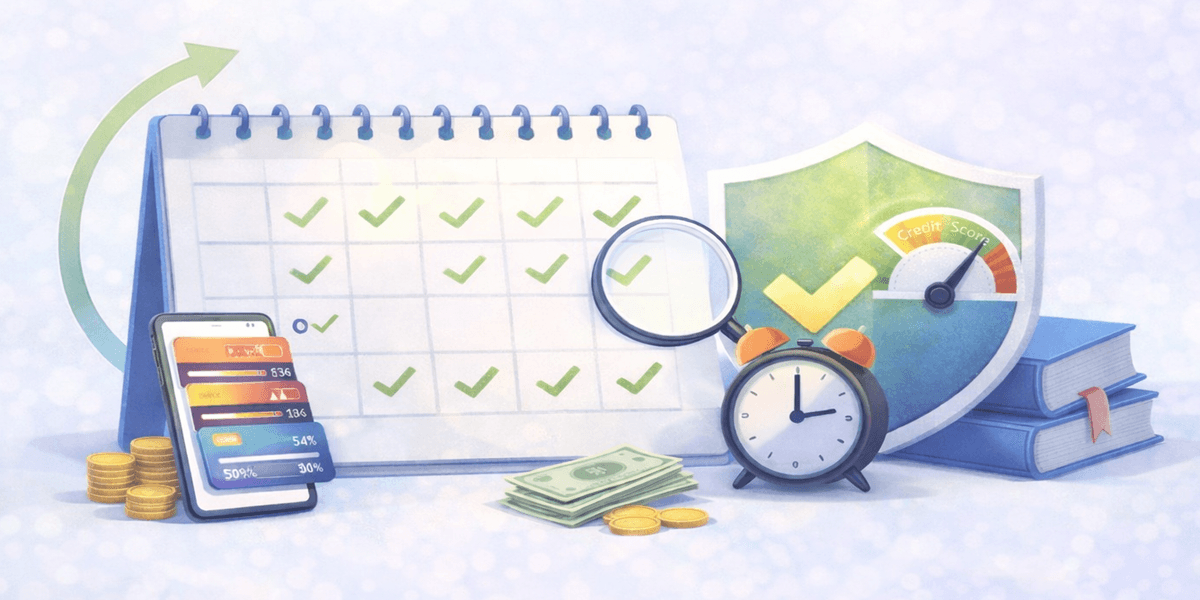
That’s why we built the 30-Minute Monthly Credit Check:
📉 Review balances & utilization
✅ Confirm payments posted
🔔 Scan alerts
🔁 Adjust one thing
🧠 Log a note
Consistency beats intensity.
A short routine prevents:
Emergency-only reactions
Emotional decision-making
Surprise declines
Credit becomes part of your system — not something that interrupts it.
🏗️ What This Series Really Built
This wasn’t a series about boosting your score by 20 points.
It was about building:
Visibility
Predictability
Structure
Confidence
When households implement systems instead of reacting emotionally, outcomes stabilize over time.
Operational environments show the same pattern — structured routines reduce error, improve efficiency, and prevent reactive work.The same principle applies to personal credit management. Systems outperform bursts of effort. Every time.
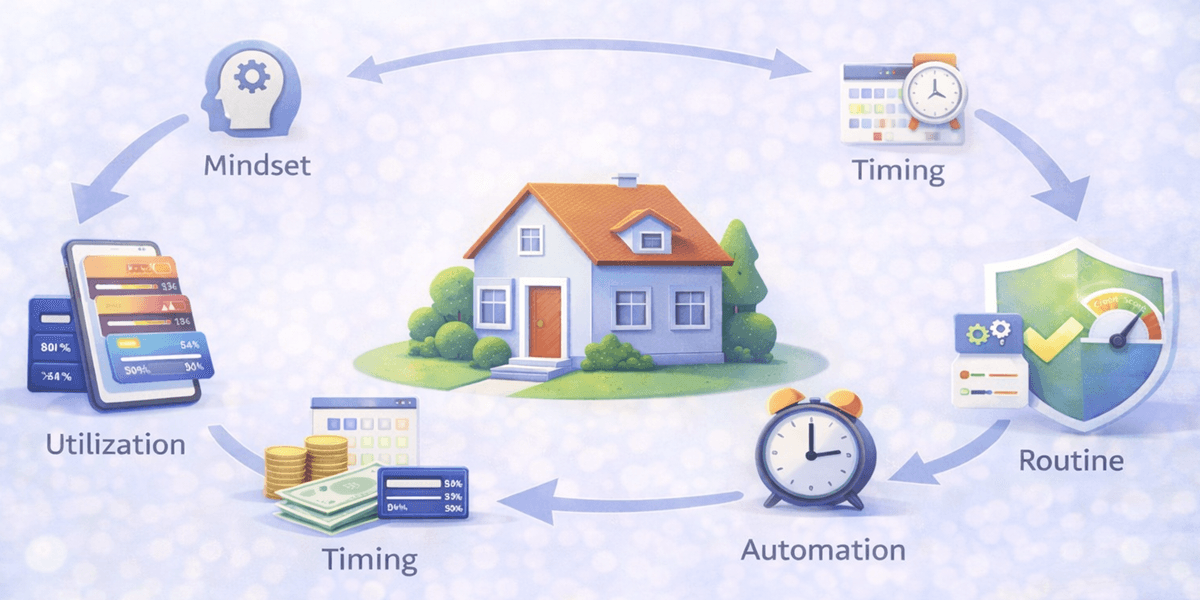
🏠 The Complete Credit Control Framework
When you zoom out, the system looks like this:
🧠 Mindset - Understand the home economy as a system.
🔔 Awareness - Monitor for meaningful changes.
📉 Control - Manage utilization intentionally.
📆 Timing - Align payments with reporting cycles.
🛠️ Automation - Protect your system from disruption.
🔁 Routine - Repeat consistently.
Each layer supports the next. Remove one, and the system weakens. Maintain all six, and control becomes predictable.
💡 What Changes When You Follow This System
Credit becomes:
Less emotional
Less surprising
Less reactive
More strategic
You stop asking: “What happened?”
And start asking: “What adjustment makes sense this month?”
That shift builds calm confidence.
⚠️ What This Series Is Not
It’s not:
A guarantee of approvals
A promise of instant score jumps
A strategy for gaming the system
It’s a structure for managing risk, timing, and visibility. And that’s far more sustainable.
✅ Final Takeaway
🔁 Credit control isn’t complicated — it’s just rarely organized.
You don’t need to monitor daily
You don’t need perfect discipline
You don’t need to avoid credit entirely.
You need:
A clear system
Repeatable actions
Measured decisions
Monthly visibility
When credit management becomes structured, it stops feeling stressful.
And when it stops feeling stressful, it becomes sustainable.