📆🔁 Payment Timing & Automation — Turning Good Intentions Into Consistent Credit Results
Many households do the “right things” with credit. They pay their bills on time, avoid missed payments, and try to stay within their means — yet still experience frustrating credit outcomes.
Balances feel stubborn. Scores fluctuate unexpectedly. Credit utilization seems higher than expected.
In most cases, the problem isn’t effort. It’s timing.
Payment timing and automation are often overlooked because they don’t feel dramatic. But they quietly shape how credit activity is reported, interpreted, and evaluated. When these systems are working properly, credit outcomes improve almost invisibly. When they’re misaligned, even responsible behavior can produce disappointing results.
This follow-up to Blog #4 focuses on how payment timing and automation turn good intentions into reliable, repeatable outcomes.
🧠 Why Payment Timing Matters More Than Most People Realize
Most people are taught a single rule about credit cards:
“Pay your bill by the due date.”
That rule protects you from late payments — but it doesn’t explain how credit actually gets reported.
Credit scoring and lender reviews are driven by snapshots, not narratives. They don’t see how hard you tried or how quickly you paid something off later. They see what was reported at a specific moment in time.
That moment is usually tied to the statement closing date, not the due date.
Understanding this distinction is one of the most important shifts a household can make.
📄 Statement Closing Date vs ⏰ Payment Due Date
Every credit card cycle revolves around two key dates, and confusing them is one of the most common sources of frustration.
📄 Statement Closing Date
This is the date when:
Your balance is finalized for the billing cycle
That balance is typically reported to the credit bureaus
Credit utilization is calculated for that month
Think of this as the camera snapshot date.
⏰ Payment Due Date
This is the date by which:
You must make at least the minimum payment
You avoid late fees and late payment reporting
Think of this as the deadline, not the snapshot.
If a balance is high on the statement date, that’s what usually gets reported — even if you pay the balance in full a week later.
This is why someone can pay on time every month and still struggle with utilization-related issues.
📉 How Payment Timing Directly Affects Utilization
Credit utilization is calculated using the balance that appears on your statement relative to your credit limit.
That means:
Utilization is reported, not averaged
Temporary spikes can still be captured
Early payments can materially change outcomes
A simple example
Credit limit: $2,000
Balance before statement closes: $1,200 (60% utilization)
Early payment before statement: $500
Reported balance: $700 (35% utilization)
Nothing about spending changed. Only timing did.
This is why payment timing is one of the fastest levers available for regaining control.
🔁 Automation: Protecting Outcomes From Busy Life
Even when people understand timing, life still gets in the way.
Automation exists to protect outcomes when:
Schedules get hectic
Attention shifts elsewhere
A month is tighter than expected
The goal of automation is not to remove awareness — it’s to remove fragility from the system.
Good automation ensures that one busy week doesn’t undo months of progress.
🛠️ Building a Smart Automation Stack (Layer by Layer)
Automation works best when it’s layered intentionally, not applied all at once.
🛠️ Layer 1: Minimum Payment Autopay (The Safety Net)
Setting autopay for the minimum payment:
Protects your payment history
Prevents accidental late payments
Reduces stress during tight months
This is not about paying the bare minimum forever. It’s about ensuring that payment history remains intact even if something unexpected happens.
Think of this as insurance, not a strategy.
🔔 Layer 2: Balance & Threshold Alerts (Early Awareness)
Automation alone isn’t enough if you’re flying blind.
Balance alerts help households notice:
When a card crosses 30% utilization
When balances rise faster than expected
When spending patterns drift
These alerts don’t force action — they prompt intentional review before damage occurs.
This is where automation supports awareness instead of replacing it.
📆 Layer 3: Statement Date Tracking (The Optimization Layer)
Knowing statement dates allows households to:
Make small early payments strategically
Control which balances are reported
Avoid utilization spikes without drastic changes
Many people know their due dates but have no idea when statements close. Once statement dates are visible, utilization becomes predictable rather than mysterious.
This is often the turning point where credit starts to feel manageable instead of confusing.
🧮 Layer 4: Payment Impact & Scenario Tools
One of the biggest barriers to action is uncertainty:
“How much do I need to pay?”
“Will this actually make a difference?”
“Is it worth moving money now?”
Payment impact tools answer those questions before money moves.
They:
Show how much to pay to cross a utilization threshold
Clarify whether timing alone is sufficient
Reduce emotional decision-making
Confidence grows when outcomes are visible in advance.
📊 Understanding the Utilization Explainer Graphic
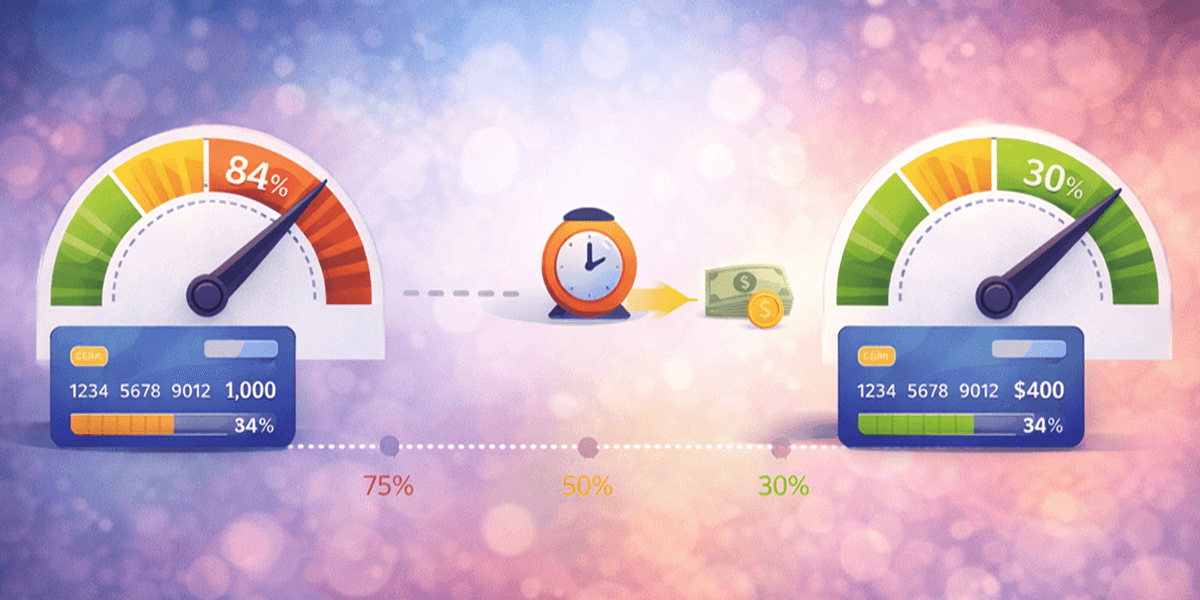
The utilization explainer graphic introduced in this series is intentionally text-free. Its purpose is not to teach rules, but to show cause and effect visually.
What the graphic communicates
A utilization gauge moving from red → yellow → green
A timeline showing balance before and after statement close
Clear visual separation between “reported” and “paid later”
Why this matters
Many consumers intellectually understand utilization but don’t feel it. Visuals compress complexity into something intuitive, helping households internalize why timing matters without needing formulas.
This visual clarity often reduces anxiety more effectively than explanations alone.
⚠️ Common Automation & Timing Pitfalls
Even well-intentioned systems can backfire if they’re misunderstood.
❌ Full-Balance Autopay Without Cash-Flow Awareness
This can strain checking accounts and increase reliance on credit elsewhere.
❌ No Alerts Enabled
Without alerts, automation becomes passive rather than protective.
❌ Ignoring Statement Dates
This turns utilization into guesswork and creates avoidable frustration.
Automation should support control, not hide problems.
🏠 Payment Timing Inside the Home Economy
Payment timing doesn’t exist in isolation. It interacts with:
Income schedules
Household buffers
Credit card usage patterns
Monthly variability
When timing aligns with the broader home economy:
Credit outcomes stabilize
Stress decreases
Decisions feel deliberate
Progress becomes repeatable
This is why payment timing sits at the center of sustainable credit management — it connects behavior, systems, and outcomes.
🔁 A Simple Monthly Timing Check (Under 5 Minutes)
Once per month:
Review upcoming statement dates
Check current utilization levels
Confirm alerts are active
Adjust one payment if needed
Small, consistent adjustments prevent large, stressful corrections later.
✅ Key Takeaway
🔁 Payment timing and automation don’t change how responsible you are — they change how reliably that responsibility shows up on your credit.
You don’t need perfection, new credit, or complicated strategies. You need:
Visibility into key dates
Automation that protects you
Tools that replace guesswork
When timing and automation work together, credit control becomes routine — not reactive.