📊🔁 Mastering Credit Utilization — The Fastest Way to Regain Control
When people think about improving their credit, they often focus on the wrong levers: opening new accounts, chasing small score increases, or waiting ...
When people think about improving their credit, they often focus on the wrong levers: opening new accounts, chasing small score increases, or waiting for old issues to “age off.” But there is one factor that can shift credit outcomes faster than almost anything else — credit utilization.
Utilization isn’t complicated, but it is powerful. And when households understand how it works, it becomes one of the most effective tools for regaining control of both credit and cash flow.
📊 What Credit Utilization Really Means
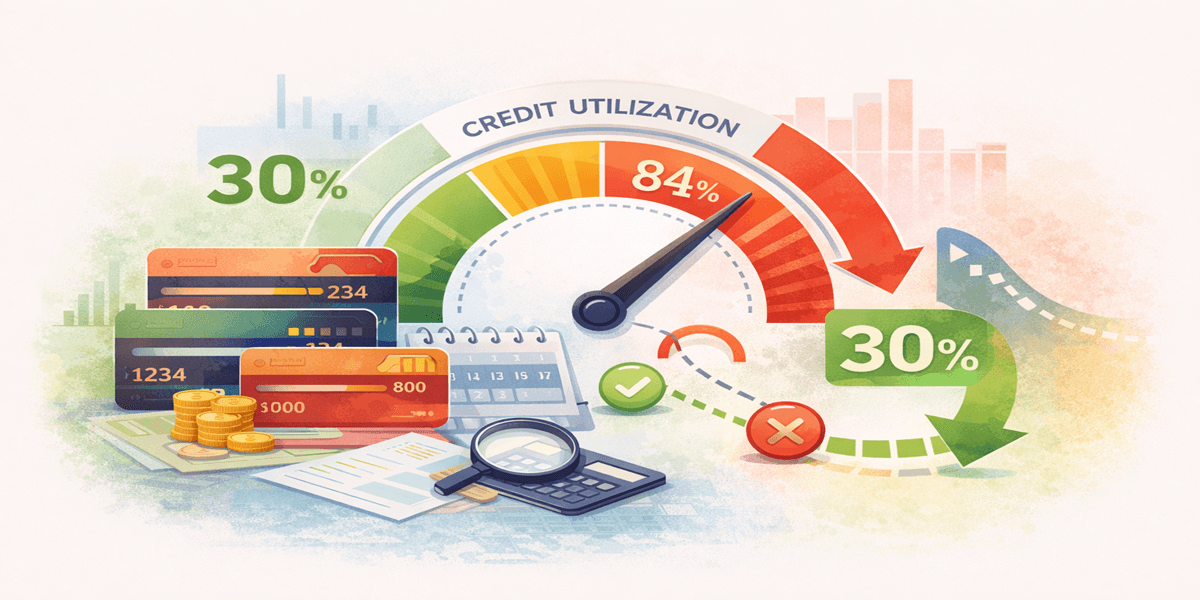
Credit utilization is the percentage of available revolving credit you’re using at any given time.
If you have:
A credit card with a $1,000 limit
A balance of $300
Your utilization on that card is 30%.
Lenders don’t just look at your total balances. They look at:
Utilization per card
Utilization across all cards
How often balances approach limits
Whether balances are rising or falling
This makes utilization one of the clearest signals of short-term financial pressure.
⚡ Why Utilization Has Such a Big Impact
Utilization is weighted heavily because it answers a core lender question:
“How dependent is this household on borrowed money right now?”
High utilization suggests stress or limited flexibility. Lower utilization suggests control and margin.
Unlike payment history, which takes time to build or repair, utilization can change within a single billing cycle. That’s why it’s often the fastest way to influence credit outcomes.
📉 The Utilization Thresholds That Matter
While scoring models vary, these ranges are broadly consistent:
0–9% → Excellent
10–29% → Very good
30–49% → Moderate risk
50–74% → High risk
75%+ → Very high risk
Crossing 30%, 50%, or 75% can trigger noticeable drops — even if you’ve never missed a payment.
Just as importantly, utilization is not averaged emotionally. One maxed-out card can weigh down an otherwise healthy profile.
🧠 The Most Common Utilization Mistakes
Many households unintentionally sabotage their credit by misunderstanding how utilization works.
❌ Mistake 1: “I pay in full every month, so it doesn’t matter”
If your balance is high when it’s reported, it still counts — even if you pay it off later.
❌ Mistake 2: Focusing only on total utilization
A single card at 90% utilization can hurt more than three cards at 20%.
❌ Mistake 3: Letting balances spike temporarily
Short-term spikes around holidays or emergencies can still be captured in reports.
❌ Mistake 4: Using all cards “a little”
Spreading balances across every card raises overall exposure and reduces flexibility.
🛠️ Tools That Help You Control Utilization
Utilization improves fastest when households use visibility tools, not willpower alone.
📄 Credit reports
These show:
Individual card limits
Reported balances
Which cards are driving utilization
📊 Utilization trackers
Dashboards that visualize utilization by card help households:
Identify problem accounts quickly
Prioritize which balances to pay first
Avoid accidental threshold crossings
🔔 Balance alerts
Simple alerts when a card crosses:
30%
50%
75%
…can prevent damage before it happens.
These tools turn utilization from a mystery into something manageable.
💡 The “One-Card Focus” Strategy
One of the most effective techniques is choosing one card to actively reduce, rather than trying to fix everything at once.
How it works:
Identify the card with the highest utilization
Redirect extra payments there
Keep other cards stable (not growing)
Once that card drops below 30%, move to the next
This approach:
Delivers faster visible results
Reduces mental overload
Improves credit signals incrementally
Momentum matters — psychologically and financially.
🗓️ Timing Matters More Than Amounts
Many people don’t realize that when you pay can matter as much as how much you pay.
Most cards report balances:
On the statement closing date
Not on the due date
That means:
Paying part of the balance before the statement closes can reduce reported utilization
Waiting until the due date may be too late for that cycle
Even partial early payments can significantly improve utilization signals.
🏠 Utilization and the Home Economy
Utilization isn’t just about credit scores — it reflects how a household is operating day to day.
High utilization often signals:
Income timing mismatches
Over-reliance on cards for essentials
Limited cash buffers
Reactive spending patterns
Lower utilization suggests:
Better cash flow alignment
More margin for emergencies
Greater financial confidence
Reduced stress
In this way, utilization becomes a home-economy health indicator, not just a credit metric.
🧠 Emotional Traps to Avoid
Utilization improvements can trigger emotional responses that undo progress.
⚠️ “My score went up — I can relax”
Early gains are fragile. Stability over time matters more than a single jump.
⚠️ “I should close unused cards”
Closing cards reduces available credit and can increase utilization overnight.
⚠️ “I’ll wait until I can pay it all off”
Small, strategic reductions often work better than waiting for perfection.
Progress beats delay.
🔁 How Utilization Fits Into the Bigger System
Utilization works best alongside:
Consistent on-time payments
Controlled application behavior
Credit monitoring for balance spikes
Budgeting that reflects real cash flow
It doesn’t require new debt, complex strategies, or financial gymnastics. It requires awareness, timing, and intention.
That’s why it’s often the first lever to pull when regaining control.
✅ Key Takeaway
📉 Credit utilization is the fastest, most controllable way to shift credit outcomes — because it reflects what’s happening right now.
You don’t need perfect finances to improve utilization. You need:
Visibility
A plan
The right tools
Consistent, small actions
Mastering utilization puts households back in the driver’s seat — and sets the foundation for everything that follows.