🔔📄 Credit Monitoring Without the Stress — What to Watch and What to Ignore?
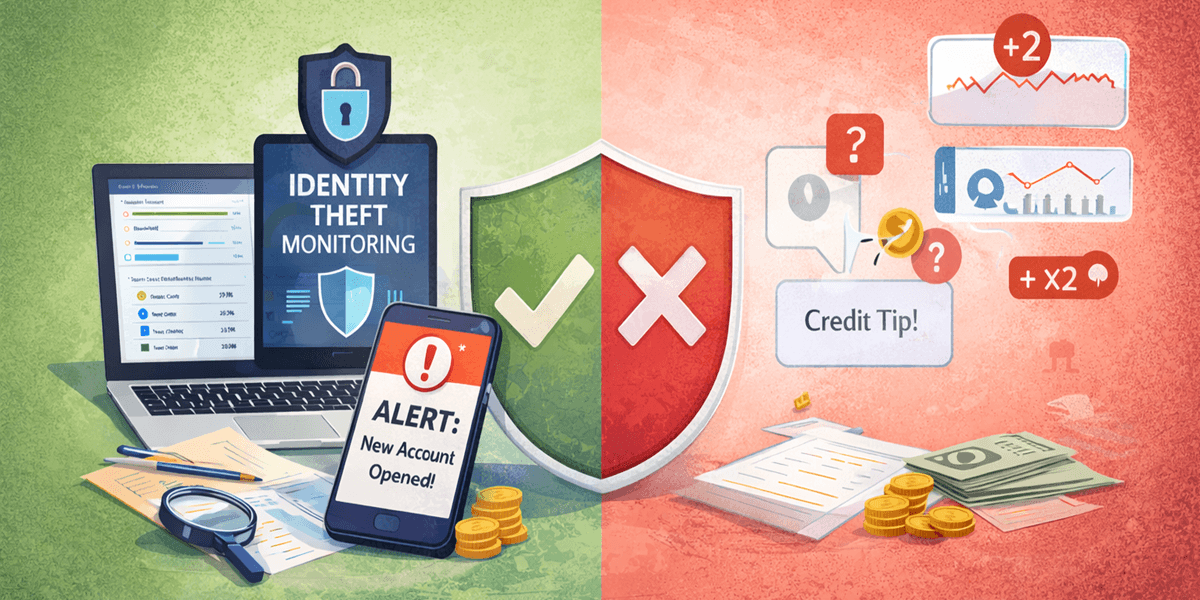
Credit monitoring tools are becoming more popular and accessible. Score updates, alerts, identity warnings, and notifications all promise protection and control. But without context, these tools can easily create anxiety instead of clarity.
The goal of credit monitoring isn’t constant checking. It’s early awareness — knowing about changes early enough to respond calmly and effectively.
When monitoring is used correctly, it supports better decisions. When it’s misunderstood, it can feel overwhelming or misleading. Understanding the difference is what turns monitoring into a strength rather than a stressor.
🔔 What Credit Monitoring Is Actually For
Credit monitoring exists to shorten the gap between something changing and you finding out.
Used well, monitoring helps households:
Detect new accounts early
Catch balance spikes before damage spreads
Spot reporting errors quickly
Respond before problems compound
Monitoring is not designed to:
Predict loan approvals
Guarantee outcomes
Replace credit understanding
Eliminate all financial risk
Think of monitoring as awareness support — not a crystal ball.
📄 What Lenders Actually See (and What They Don’t)
One reason monitoring causes stress is confusion about who sees what.
📄 Credit reports show:
Account status (open, closed, delinquent)
Payment history patterns
Balances and credit limits
Account age and mix
Recent hard inquiries
These elements reflect patterns over time, not single moments.
🚫 Credit reports do not show:
Daily score fluctuations
Monitoring alerts
Weekly score trends
Personal circumstances or intent
Lenders never see your alerts. They never see how often you check your credit. They only see what is officially reported.
Understanding this distinction helps consumers focus on signals, not noise.
🔔 Alerts That Matter Most (High-Value Signals)
Not all alerts deserve equal attention. Some are early warnings worth acting on quickly.
✅ High-value alerts include:
New account opened Signals possible fraud or mistaken identity.
Payment marked late Requires immediate review to limit damage.
Balance jumps close to limits Indicates rising utilization risk.
Identity-related warnings Suggest compromised personal information.
These alerts protect credit by shortening reaction time.
🔕 Alerts That Matter Less (Low-Value Noise)
Some alerts exist to keep users engaged rather than informed.
⚠️ Lower-value alerts include:
Small score changes (up or down a few points)
Weekly or daily “score trend” notifications
Generic tips triggered automatically
“Congratulations” or “warning” messages without context
These alerts often reflect normal fluctuations, not meaningful change.
Ignoring them is not neglect — it’s focus.
🧠 Monitoring Without Obsession
Healthy credit monitoring follows a rhythm, not a constant feed.
🔁 A calmer, more effective approach:
🔔 Alerts ON for critical changes
📄 Credit report reviewed monthly
📘 Full review quarterly or annually
✅ Action taken only when needed
This approach keeps awareness high without turning monitoring into a source of anxiety.
Monitoring works best when it supports decisions — not emotions.
📄 Why Reports Matter More Than Scores
Scores are summaries. Reports are evidence.
Credit reports show:
Whether payments posted correctly
Which accounts influence utilization most
Where balances are trending
Whether data is accurate
A household can have:
A stable score with hidden risk, or
A fluctuating score with improving fundamentals
Reports provide context that scores alone never can.
🛡️ Identity & Dark Web Monitoring Explained Simply
Identity monitoring tools don’t prevent fraud. They reduce detection time.
That difference matters.
Early detection helps:
Limit financial damage
Shorten resolution time
Reduce stress and uncertainty
Protect long-term credit health
When used correctly, these tools act like background security — quiet, passive, and ready if needed.
They are defensive tools, not danger alarms.
🔔 How Monitoring Fits Into the Home Economy System
Monitoring supports the broader home economy by:
Increasing visibility
Reducing surprises
Supporting proactive action
Reinforcing confidence
It doesn’t replace:
Cash-flow management
Utilization control
Payment timing
Financial planning
Monitoring is one layer in a system — not the system itself.
🧠 The Monitoring Mindset
The healthiest way to think about credit monitoring is to compare it to a smoke detector.
You don’t stare at it all day
You want it to work instantly when needed
You take action only when there’s a real signal
Used this way, monitoring fades into the background — which is exactly where it belongs.
✅ Key Takeaway
🔔 Credit monitoring isn’t about watching everything — it’s about noticing the right things early.
With effective monitoring in place, households are free to focus on the most powerful controllable factor in credit outcomes: 📉 credit utilization and balance timing.
That’s where the next part of the series goes deeper.
YourCreditInsights can help you with the tools you need to take more effective control of your finances.
🔔 Credit alerts → New account & balance change notifications
📄 Credit reports → Full account & history view
🛡️ Identity tools → Dark web & breach monitoring
📘 Education prompts → Contextual explanations